About Zùsto · 21 November 2026
Diabetes Month, everyday choices · A dietitian’s guide to calmer sweet moments
This article shares general information, not medical advice. For nutrition and diabetes questions, always consult your doctor or registered dietitian.
November is Diabetes Month. When people talk about food and diabetes, the conversation often turns to restrictions and rigid rules. But everyday habits can start with a more welcoming question: how can we keep the pleasure of the table while making choices that suit us?
This guide explores three practical ideas: timing, pairing and right-sizing. Alongside them, we look at a fibre-forward sweetening system that swaps 1:1 by weight in recipes. These are ideas to discuss with your doctor or dietitian, not a diabetes treatment plan.
1. Why timing matters more than we think
A slice of cake enjoyed after a balanced lunch is a different eating occasion from the same slice eaten alone in the afternoon. Protein, fat and fibre in a mixed meal can slow digestion and influence how carbohydrates are absorbed. The effect varies with the meal and the person.
- A practical rhythm: consider enjoying dessert with or after lunch or dinner rather than as a stand-alone snack, if that fits your care plan.
- Water bookends: a few sips before and after your meal can be a simple reminder to stay hydrated.
2. Pairing that changes the “after”
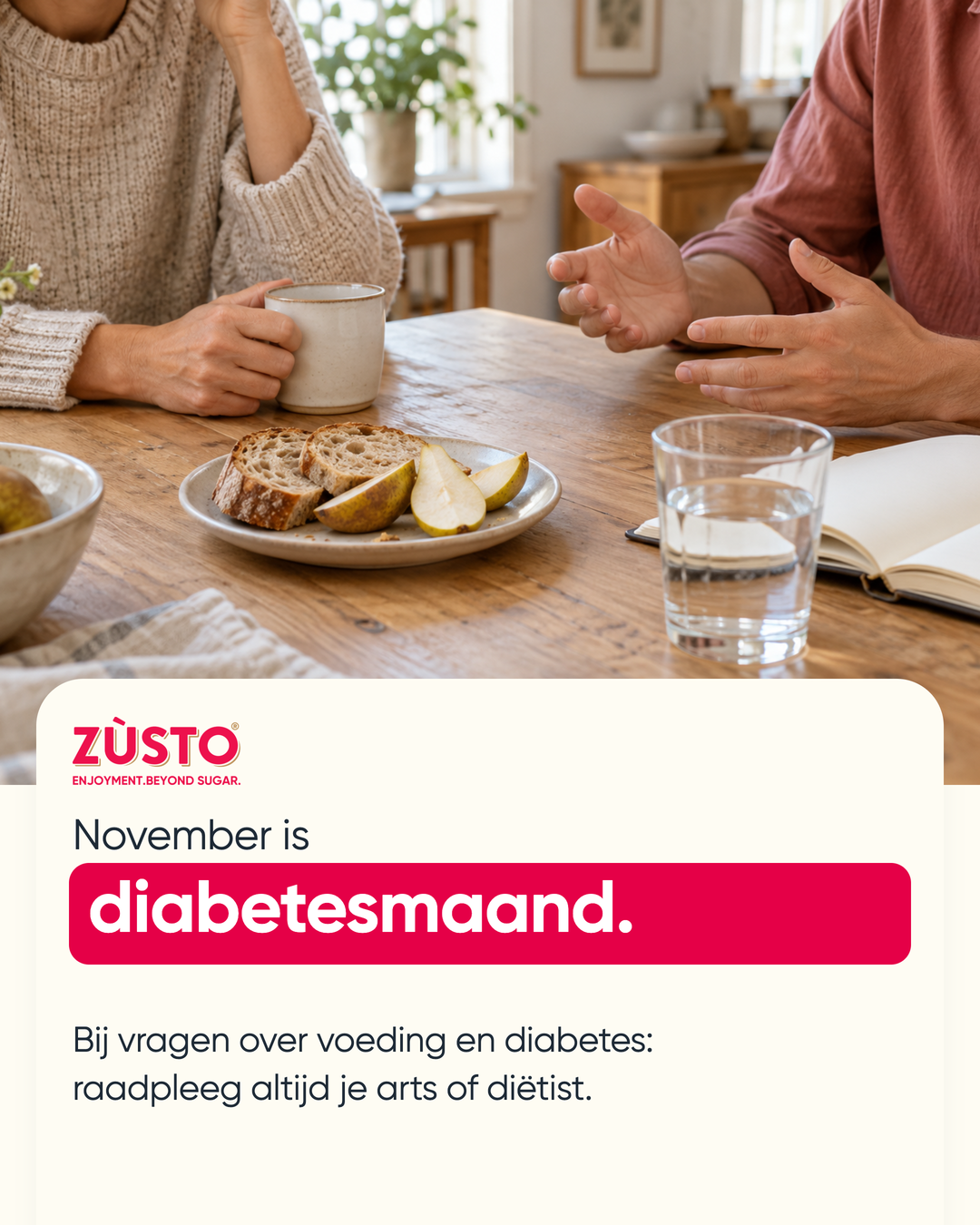
Pairing is the art of giving sweetness good company. Think of whole-grain bread, sliced pear and plain yoghurt or an egg on the side. Bringing carbohydrates together with protein and fibre gives you a more varied plate.
The barista tip: when sweetening coffee or cocoa with Zùsto 1 kg or Zùsto 300 g, dissolve it in the hot liquid base first, then add your milk or plant drink. It is a small step towards an even, velvety finish.
3. Right-size portions without calorie maths
Simple starting portions can make it easier to enjoy a treat deliberately. They are examples, not prescriptions: your own needs and care plan come first.
- Two squares of Belgian Dark Chocolate 64%.
- One tablespoon of silky Hazelnut Spread on toast or fruit.
- One small slice of home-baked cake.
The treat-plate habit: put your chosen portion on a plate rather than eating straight from a jar or baking tin. Sit down and give those bites your full attention.
4. Where Zùsto fits: science, not hype
Zùsto was developed to replace sugar in the kitchen without asking you to leave the pleasure of baking behind.
- 1:1 by weight: replace 100 g of sugar with 100 g of Zùsto Sugar Substitute. Start with a familiar recipe and check the crumb, rise and browning as you bake.
- Prebiotic fibre blend: Zùsto contains approximately 64.7% prebiotic fibre, with fibres from chicory root and corn.
- Numbers in context: the sugar substitute has a measured glycaemic index around 22, compared with approximately 65 for table sugar, and provides approximately 98 kcal per 100 g, about 75% fewer calories than sugar.
These figures describe the sugar substitute itself, not every dessert made with it. Flour, fruit, portion size and the rest of the meal also matter. A lower GI does not mean a food has no effect on blood glucose, and individual responses vary.
5. Three seven-day experiments to discuss
Pick one small change for a week, provided it fits the guidance from your care team. Keep your medication and prescribed eating schedule unchanged.
- Meal-timed dessert: try enjoying your sweet moment with or after a meal. Note how you feel 60 to 120 minutes later.
- The pairing test: give a familiar snack some company, such as plain yoghurt, walnuts or pumpkin seeds. Notice enjoyment and fullness.
- The 1:1 bake swap: choose apple cake or chocolate muffins and replace the sugar gram-for-gram with Zùsto. Note the taste, browning and texture.
Your notes are observations, not a diagnosis or a reason to change diabetes treatment.
6. Personalisation and safety
Every person’s needs are different. Sleep, stress, activity and medication can all influence your response to food.
- Ease into fibre: start with modest portions, stay hydrated and adjust to your digestive comfort.
- Follow your own plan: if you monitor blood glucose, follow your care team’s guidance rather than replacing it with how you feel.
- Share the label: Zùsto is food, not medicine. Take its nutritional information to your doctor, diabetes educator or registered dietitian to discuss how it fits your meals.
Questions and answers
Do I need to change my oven temperature?
Start with your usual temperature and time. Check doneness using the recipe’s cues, such as aroma, spring and a clean toothpick.
Why measure by weight rather than volume?
Zùsto and table sugar have different densities. Kitchen scales make the 1:1 swap accurate: 100 g for 100 g.
Can I use Zùsto every day?
It is designed for everyday cooking and baking. If you manage diabetes or a digestive or metabolic condition, discuss suitable amounts with your clinician or dietitian.
This article shares general information, not medical advice. For nutrition and diabetes questions, always consult your doctor or registered dietitian.
Read next